Now Reading: JS Tan and Clarissa Redwine’s “Against Tech Oligarchy”
-
01
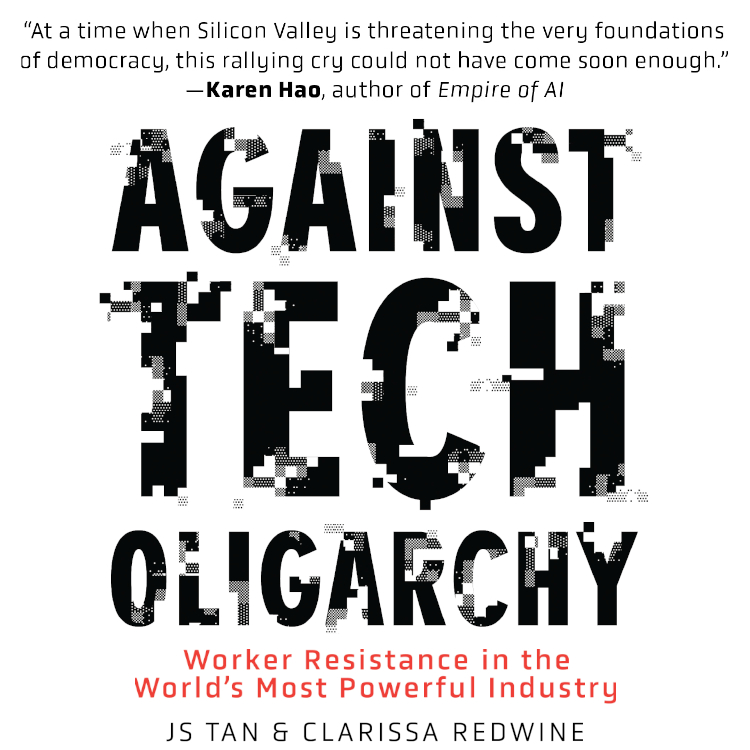
JS Tan and Clarissa Redwine’s “Against Tech Oligarchy”

Article Summary
The book chronicles significant labor movements within the tech sector, such as the unionization efforts at Kickstarter and the broader pushback at companies like Google and Microsoft. These movements have gained momentum, especially during the pandemic, which saw tech companies hiring en masse while simultaneously fostering a more hostile environment for worker organization. The authors note that the tech industry's response to worker unrest has often been retaliatory, with management employing various tactics to undermine unionization efforts. This atmosphere has prompted many workers, inspired by earlier successes, to pursue traditional union organizing strategies, often with the support of established unions.
Tan and Redwine emphasize that the conventional labor organizing strategies, which rely on gradual, discreet power-building, are ill-suited for the tech sector's unique challenges. Given the transient nature of tech employment and the isolation of many workers, traditional methods often fail to engage and mobilize workers effectively. Instead, the authors advocate for a more aggressive approach that revives the pre-labor activism spirit, encouraging public confrontations over management practices that violate worker rights. This strategy aims to galvanize workers and create a sense of collective purpose, ultimately leading to more sustained union drives.
The authors also reflect on their own experiences and the lessons learned from failed campaigns, arguing that a shift in strategy is necessary to navigate the current labor landscape. They propose that strikes should be viewed not merely as a means to disrupt business operations, but as a way to inspire and mobilize workers. This perspective is illustrated by the actions of Microsoft workers who protested the company's involvement in the Gaza conflict, employing creative tactics to draw attention to their cause. Such actions demonstrate the potential for tech workers to reclaim their agency and challenge the status quo.
Ultimately, "Against Tech Oligarchy" serves as both a historical account and a call to action for tech workers. Tan and Redwine argue that the labor movement must adapt to the realities of the tech industry, embracing a more militant stance reminiscent of earlier labor struggles. By fostering solidarity among workers and leveraging creative forms of activism, they believe that tech workers can reshape their industry and reclaim their rights in an increasingly oligarchic landscape. The book emphasizes the importance of remembering the lessons of labor history, advocating for a return to the roots of labor militancy as a means to secure a better future for tech workers.




Related Posts



Stay Informed With the Latest & Most Important News
Newsletter Signup
Previous Post
Next Post