Now Reading: Democrats are coming for Trump’s tech allies. An AI insider sees a warning sign
-
01
Democrats are coming for Trump’s tech allies. An AI insider sees a warning sign
Democrats are coming for Trump’s tech allies. An AI insider sees a warning sign

Article Summary
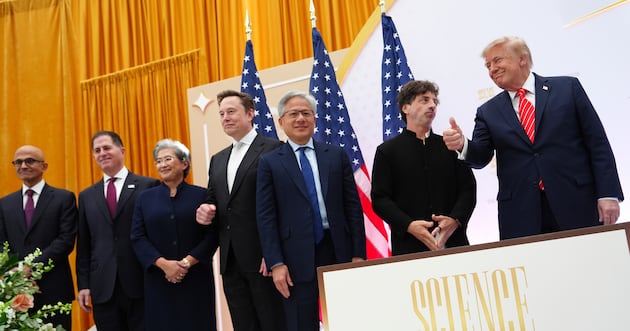
High-ranking Democrats, expected to chair influential committees, are particularly focused on tech executives who donated to Trump's initiatives or provided resources for government projects. The scrutiny is partly fueled by a growing public backlash against artificial intelligence (AI) and data center development, which was evident in the midterms, where 40 out of 41 measures aimed at restricting data centers received voter support. Former U.S. Rep. Chris Stewart notes that this anger stems from a perception among Democrats that tech leaders have shifted allegiance and that they are increasingly seen as part of a billionaire class that is often vilified by the party.
In this context, industry leaders are already feeling the pressure. For instance, Palantir's CEO Alex Karp attempted to reaffirm his progressive credentials after previously courting favor with Trump by criticizing "wokeness" and offering his company's services for tracking illegal immigrants. Karp's insistence that Palantir's products are "essentially progressive" reflects a broader trend where tech executives are compelled to navigate their political identities amid rising scrutiny.
The call for accountability in AI development is gaining traction, with Stewart advocating for proactive measures to ensure responsible innovation. His organization, Public First, seeks to establish safeguards for AI, especially in light of concerns regarding national security. The situation has been further complicated by controversies involving major tech figures, such as Nvidia's CEO Jensen Huang, who has faced scrutiny over his ties to a Chinese national suspected of espionage. Stewart has highlighted this case as indicative of poor judgment that could have serious implications for national security and the tech industry.
However, Stewart warns against conflating political affiliations with criminal behavior. He argues that investigations should be based on concrete evidence of wrongdoing rather than mere associations with Trump. He cautions that the Democrats' approach could stifle innovation in the AI sector and sets a dangerous precedent for politicizing justice. This sentiment reflects a growing concern that targeting individuals based solely on their political connections could undermine democratic norms and lead to a broader weaponization of political power against perceived opponents in the tech industry.




Related Posts



Stay Informed With the Latest & Most Important News
Newsletter Signup
Previous Post
Next Post