Now Reading: America 250: Lincoln Delivers the Gettysburg Address
-
01
America 250: Lincoln Delivers the Gettysburg Address

Article Summary
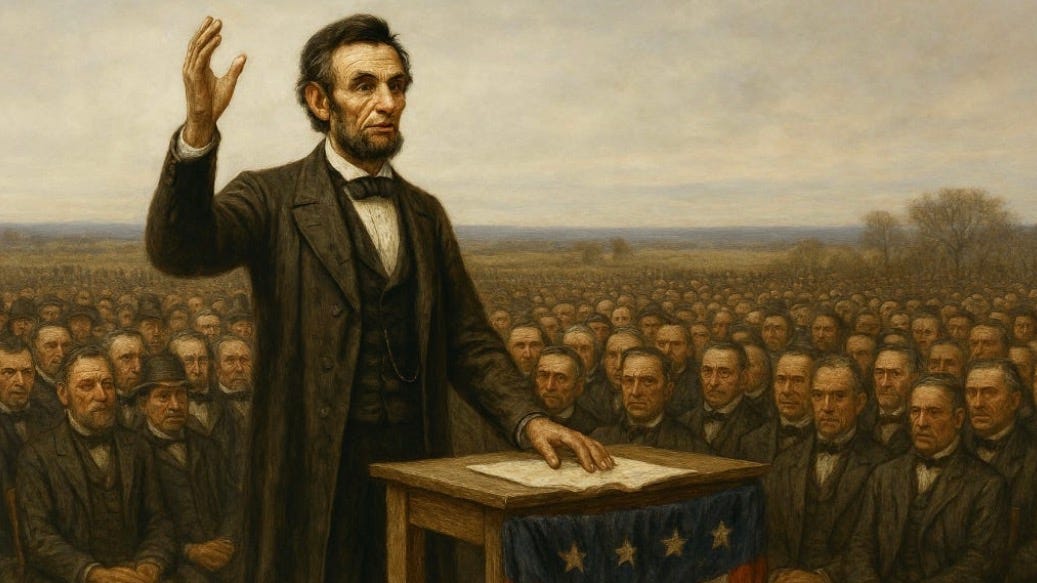
Lincoln's address began with a reflection on the nation's founding, stating, “Four score and seven years ago our fathers brought forth on this continent, a new nation, conceived in Liberty, and dedicated to the proposition that all men are created equal.” He framed the Civil War as a test of whether such a nation could endure, underscoring the significance of the battlefield where he spoke. The president's intention was to honor the sacrifices made by the soldiers and to remind the living of their duty to continue the work of achieving true liberty and equality.
In a poignant moment, Lincoln declared that the ground itself could not be consecrated by his words, as it was the brave men who fought and died there who had already sanctified it. He expressed a humble belief that his speech would not be remembered, contrasting it with the enduring legacy of the soldiers' actions. His hope was to inspire a commitment to the principles of freedom and equality that the nation was founded upon, urging the living to continue the "unfinished work" of those who had sacrificed their lives.
The context of Lincoln's speech also highlighted the atrocities committed by Confederate forces, including the kidnapping and enslavement of Black individuals in Pennsylvania. These actions were part of a systematic campaign sanctioned by the Confederate government, illustrating the war's deep ties to the issue of slavery. Lincoln's address served not only as a tribute to the fallen but also as a stark reminder of the existential struggle between the Union's ideals and the Confederacy's oppressive practices.
As America approaches its 250th anniversary, the article draws parallels between Lincoln's time and contemporary political and cultural battles. It suggests that the same forces opposing liberty and equality that Lincoln faced are still present today. The article challenges modern Americans to reflect on their commitment to preserving the principles of democracy and freedom, asking whether they are prepared to fight for the same ideals that shaped the nation over a century ago.




Related Posts

Stay Informed With the Latest & Most Important News
Newsletter Signup
Previous Post
Next Post