
Now Reading: Don’t expect Trump to be a lame duck president despite the midterm shellacking
-
01
Don’t expect Trump to be a lame duck president despite the midterm shellacking
Don’t expect Trump to be a lame duck president despite the midterm shellacking

Article Summary
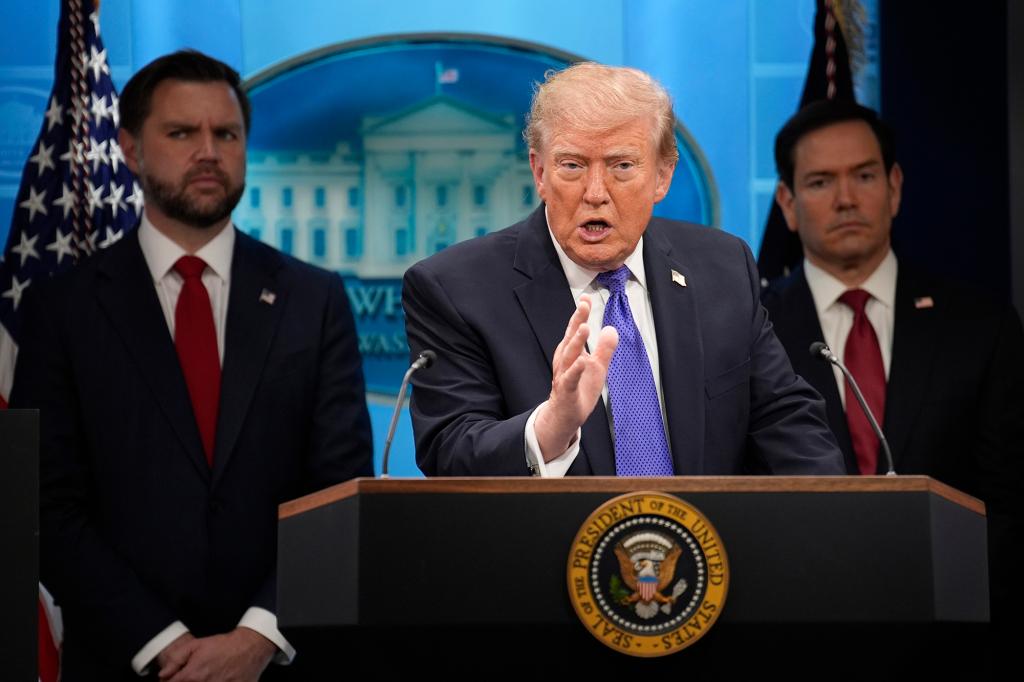
During the press conference, Trump showcased a buoyant demeanor, seemingly liberated from the constraints of election-year politics. Flanked by Vice President JD Vance and Secretary of State Marco Rubio—both potential successors—Trump's remarks focused heavily on his recent meetings with global leaders Xi Jinping and Vladimir Putin. He characterized the trip as a triumph, emphasizing America’s standing as a global superpower and hinting at significant agreements, though he offered few specifics beyond a general commitment to nuclear risk reduction.
Despite the domestic political landscape shifting against him, Trump expressed a belief that he could still shape policy, particularly regarding the construction of data centers in the U.S. He dismissed Democratic concerns about the environmental impact of such projects, positioning them instead as vital opportunities for economic growth. Trump vowed to impose penalties on companies that sought to build data centers abroad, urging local communities to negotiate favorable terms with these businesses.
While Trump expressed a willingness to work with Democrats, he acknowledged the current political climate, where many Democratic leaders are more focused on investigations related to his administration rather than collaboration. With the new Congress set to convene in January, the landscape for bipartisan cooperation seems bleak, as both parties are preoccupied with internal power dynamics and leadership positioning.
As the press conference concluded, Trump’s new chief of staff, Stephen Miller, took the stage and outlined a vision for the next two years, proclaiming them would be the "greatest in American history." This moment underscored the ongoing spectacle of Trump's presidency, characterized by his contentious relationship with the media and his unorthodox approach to governance. Ultimately, while the press conference yielded little in terms of substantive policy announcements, it reaffirmed Trump's capacity to command attention and maintain a sense of influence, even in a diminished political position.




Related Posts


Stay Informed With the Latest & Most Important News
Newsletter Signup
Previous Post
Next Post