
Now Reading: Monroe’s impact on U.S. foreign policy redefined relations
-
01
Monroe’s impact on U.S. foreign policy redefined relations
Monroe’s impact on U.S. foreign policy redefined relations

Article Summary
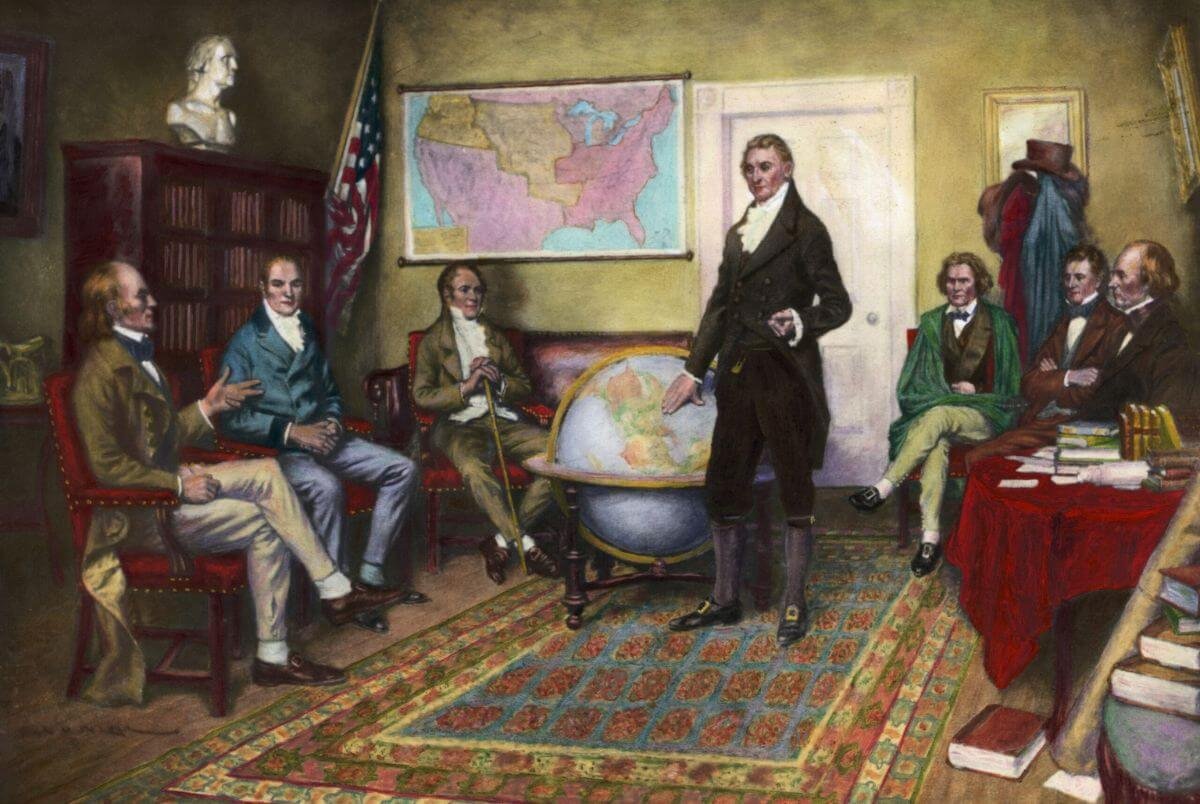
The Monroe Doctrine articulated three main principles: the establishment of separate spheres of influence for the Americas and Europe, a prohibition against new European colonial endeavors in the Americas, and a U.S. commitment to neutrality concerning European conflicts. Monroe emphasized that, in exchange for the respect of these principles, the U.S. would not interfere in existing European colonies or their domestic matters. This reciprocal arrangement aimed to build a distinct demarcation between the actions and interests of European powers and the newly independent countries in the Americas.
Despite its ambitious claims, the Doctrine was initially met with skepticism as the U.S. lacked the military power to enforce its provisions. European nations largely overlooked the Monroe Doctrine in its early years, viewing it as an unattainable ideal rather than a practical guideline. Nevertheless, as the United States grew in strength and confidence, the Monroe Doctrine gradually became a fundamental aspect of American foreign policy. Subsequent presidents invoked it to justify interventions and shape diplomatic relations throughout the hemisphere.
The significance of the Monroe Doctrine extends beyond its immediate implications; it marked a pivotal shift in the direction of American diplomacy and the nation’s self-perception within the global landscape. By delineating a line between the Americas and Europe, the U.S. began to carve out its role as a dominant power in the Western Hemisphere. This doctrine laid the groundwork for future American interactions with neighboring countries and influenced the geopolitical developments in the region for generations.
Ultimately, the Monroe Doctrine was not simply a policy statement; it was a defining moment that signified a new ambition for the United States. By asserting these principles, Monroe contributed to a lasting legacy that would impact the nation’s foreign policy approach, demonstrating a commitment to protecting the Americas from European intervention and fostering a distinct American sphere of influence in the process.