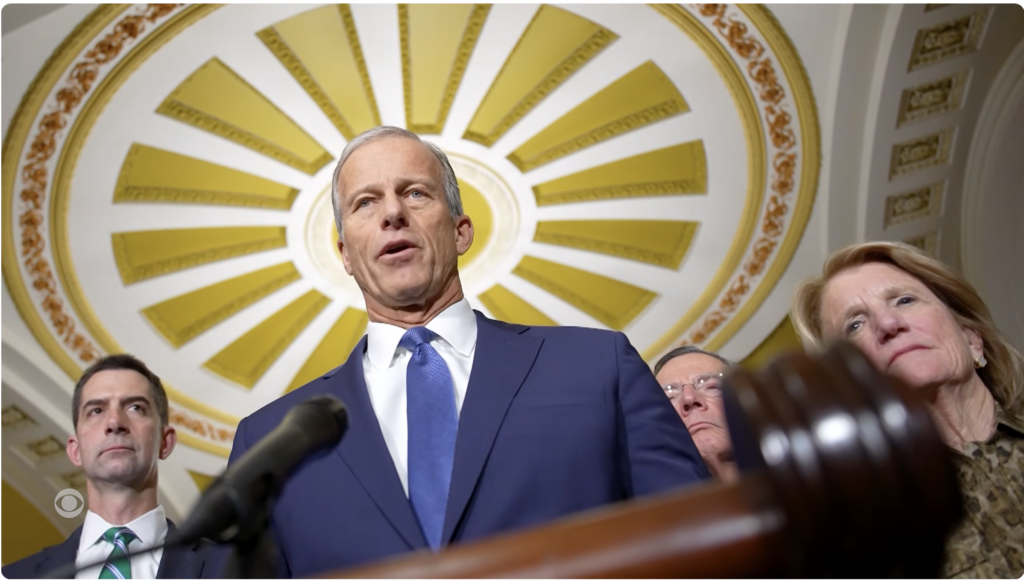
Now Reading: GOP Senate Leader John Thune On The Job Of The Minority In The Senate
-
01
GOP Senate Leader John Thune On The Job Of The Minority In The Senate


Article Summary
In terms of legislative priorities, Thune highlighted the urgency of confirming judicial nominees before the end of the year, noting that there are numerous judges awaiting confirmation. He stated that the Senate would aim to process as many nominations as possible, understanding their long-term significance for the judiciary. Additionally, Thune mentioned several key legislative items that the Senate would focus on, including defense spending, the Farm Bill, and permitting reform. He expressed hope for bipartisan support on these issues, particularly regarding permitting reform, which had already seen some Democratic backing.
Thune also addressed the potential for recess appointments, noting that while there is a convoluted process for such appointments, the need for them has diminished due to changes in nomination processing rules. He indicated that the Senate is actively working with the White House to ensure that executive branch nominations are addressed promptly, aiming to have a significant number processed before the year ends. This focus on nominations is seen as crucial for the President to effectively lead in the coming years.
The discussion then turned to the possibility of government shutdowns, with Thune acknowledging that such situations typically do not benefit either party. He indicated that the likelihood of shutdowns would depend on the Democrats' willingness to negotiate and the President's ability to work with Congress. Thune reflected on past shutdowns, noting that they did not yield the desired outcomes for the Democrats and suggested that the current political dynamics may limit their effectiveness in future negotiations.
Lastly, Thune touched on bipartisan opportunities, particularly regarding issues like Name, Image, and Likeness (NIL) in college athletics and immigration reform for non-violent individuals. He indicated that there could be a path forward for NIL legislation, which has already passed the Senate with strong bipartisan support. However, he acknowledged the challenges surrounding immigration reform, citing past difficulties in achieving consensus on this contentious issue. Overall, Thune conveyed a sense of determination to navigate the legislative landscape effectively while remaining committed to the party's core values.




Related Posts

Stay Informed With the Latest & Most Important News
Newsletter Signup
Previous Post
Next Post