Now Reading: Senate Republicans Double Down On John Thune’s Failed Leadership
-
01
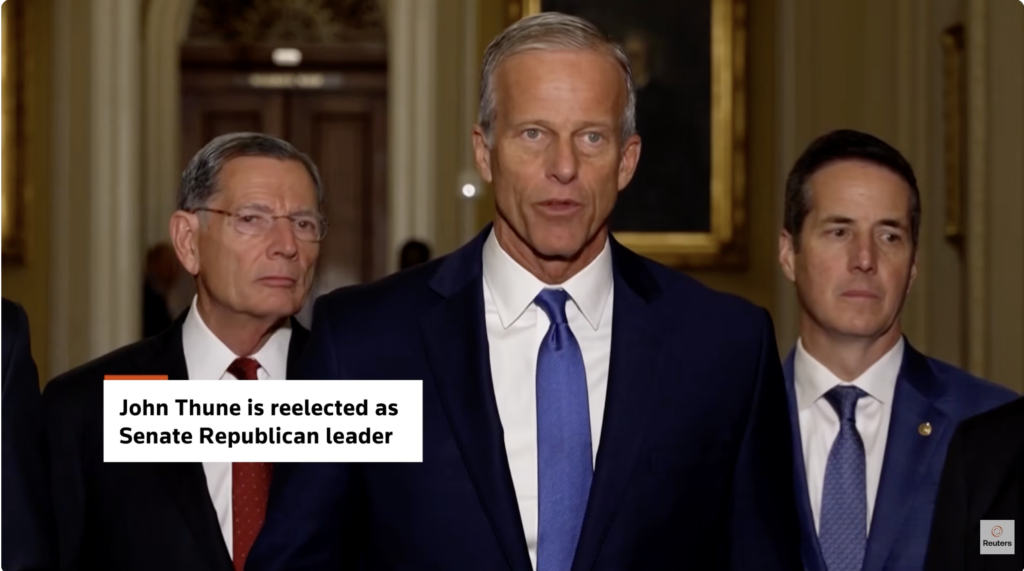
Senate Republicans Double Down On John Thune’s Failed Leadership

Article Summary
Many Republican senators have expressed frustration over their party's inability to deliver on the "America First" agenda, which they believe contributed to their electoral defeat. Instead of addressing key issues like border security and election integrity, they offered only minimal debate on these topics. Representative Chip Roy of Texas highlighted the Senate's failure to pass significant legislation, underscoring the need to codify former President Donald Trump's executive orders to secure border control and other policies.
In his first remarks as minority leader, Thune pointed to the challenges posed by the Senate's filibuster, which requires a supermajority for many legislative actions. He framed the filibuster as a necessary protection for minority rights, even as critics argue that it hampers the party's ability to enact meaningful change. Johnson and other conservatives fear that the Democrats may eliminate the filibuster altogether if they regain control, which could lead to a significant shift in the balance of power.
Despite the discontent within the party, Thune's leadership team remains largely unchanged, with familiar faces retaining their positions. This continuity has drawn criticism from some conservatives who feel that the party's establishment is not adequately addressing the concerns of its base. The lack of a serious challenge to Thune's leadership has left many feeling disillusioned about the GOP's direction and its ability to regain voter trust.
Looking ahead, both Thune and Johnson acknowledge the need for the Republican Party to unite and act decisively in the coming months. Thune has committed to working through the legislative session to confirm judicial and executive nominees, while Johnson stresses the importance of reenergizing the party's supporters. The GOP faces a critical moment as it navigates internal divisions and the challenges of regaining its footing in the political landscape.




Related Posts


Stay Informed With the Latest & Most Important News
Newsletter Signup
Previous Post
Next Post