Now Reading: Catholics Are Going to Church Less—and Voting Republican More
-
01
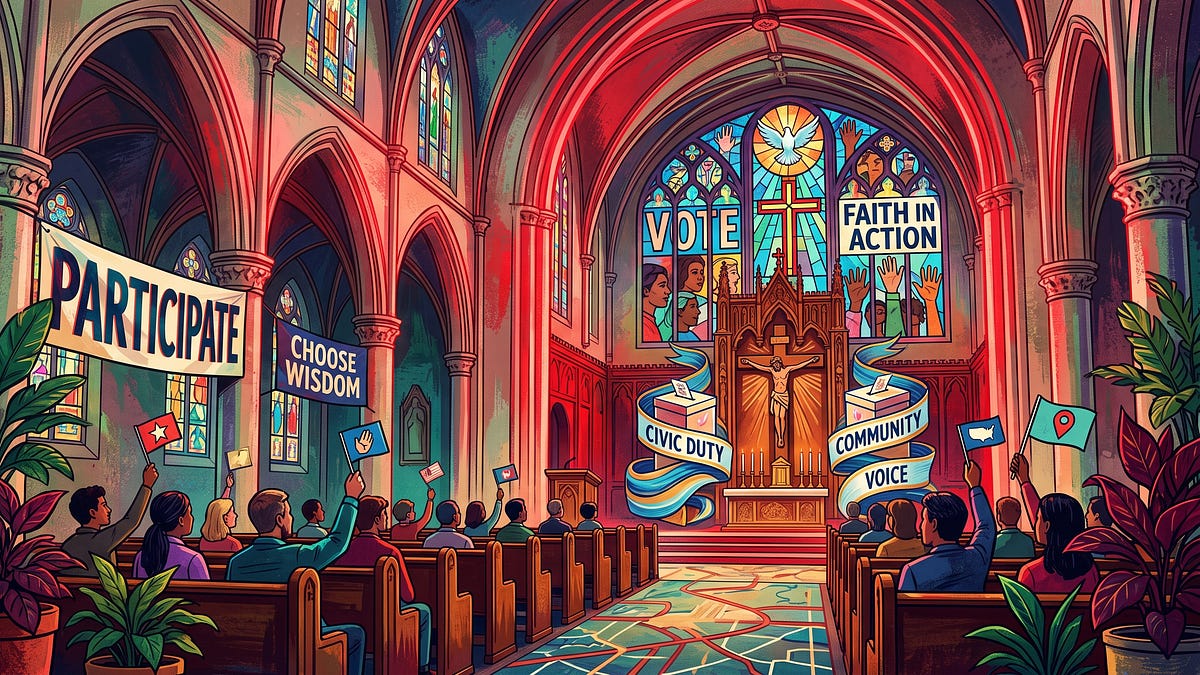
Catholics Are Going to Church Less—and Voting Republican More

Article Summary
To understand this phenomenon, it's essential to dissect two key trends: the decline in Mass attendance and the rising conservatism among Catholics. Data indicates that while attendance among evangelicals has remained relatively stable or even increased, Catholic participation in Mass has consistently declined. Concurrently, the political landscape for Catholics has transformed significantly; in the early 1970s, nearly 70% identified as Democrats, but by 2024, that number had dwindled to an equal split between Democrats and Republicans at approximately 37% each. This shift highlights a fundamental change in Catholic political identity over the last fifty years.
Further analysis reveals that this political realignment is not uniform across all Catholics. By breaking down attendance levels—frequent, occasional, and seldom attendees—research shows that all groups have moved toward the Republican Party at similar rates. While regular attendees exhibited slightly higher Republican support, the trends indicate a broader movement among less devout Catholics. In fact, the GOP has gained substantial ground among those who rarely attend Mass, suggesting that these individuals still retain Catholic sensibilities that influence their voting behaviors.
The racial dynamics within the Catholic community also play a crucial role in understanding this political shift. White Catholics are more likely to support Republican candidates compared to their non-white counterparts, revealing a significant racial divide in voting behavior. For instance, among weekly attendees in 2024, 66% of white Catholics supported Trump, contrasted with only 37% of non-white Catholics. This disparity underscores the evolving landscape of American Catholicism, which is becoming increasingly racially diverse and politically fragmented.
Ultimately, the answer to why Catholics are becoming more Republican despite declining attendance lies in the cultural and ideological frameworks that persist among those who identify as Catholic. Even those who do not regularly attend Mass often maintain a Christian worldview that shapes their political preferences. This phenomenon suggests that the GOP's success in recent elections can be attributed, in part, to its ability to engage with "never-attending" Christians and those who attend infrequently, effectively expanding its base beyond traditional churchgoers. The implications of these trends are significant for both the Catholic Church and the Republican Party as they navigate a rapidly changing sociopolitical landscape.




Related Posts


Stay Informed With the Latest & Most Important News
Newsletter Signup
Previous Post
Next Post