Now Reading: Cotton: ‘Congress has much to investigate’ after Trump push to reinstate Huang
-
01
Cotton: ‘Congress has much to investigate’ after Trump push to reinstate Huang
Cotton: ‘Congress has much to investigate’ after Trump push to reinstate Huang

Article Summary
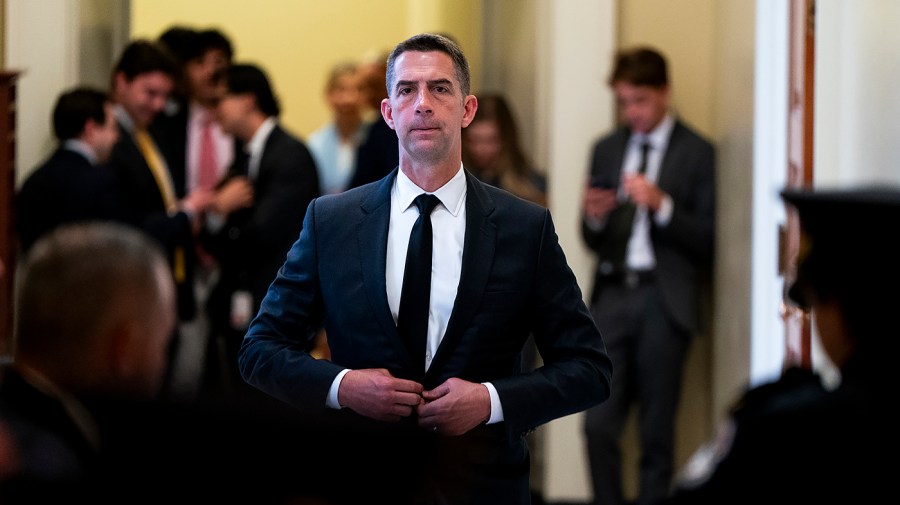
Cotton's warning underscores a broader concern among U.S. officials regarding the influence of China in the technology sector. The senator has been vocal about the need to safeguard American technological advancements from falling into the hands of adversaries that may use them for military or strategic purposes. The implications of Nvidia's leadership and its role in the semiconductor industry are particularly significant, given the increasing competition between the U.S. and China in technology and innovation.
The surge in Nvidia's stock following the announcement reflects the market's optimism regarding the company's future under Huang's leadership. However, this optimism is tempered by the potential geopolitical ramifications. Cotton's call for investigation suggests that lawmakers are not only concerned with the financial aspects but also with the strategic implications of tech leadership in a rapidly evolving global landscape. The intersection of technology, finance, and national security has become a focal point for Congress as it seeks to understand the broader implications of corporate decisions.
In light of these developments, Cotton's comments may signal a shift in how Congress approaches technology companies and their executives. There is a growing recognition that decisions made by these leaders can have far-reaching consequences that extend beyond the corporate realm. As such, lawmakers may seek to implement more stringent oversight and regulatory measures to ensure that U.S. technological advancements are protected from foreign exploitation.
Overall, the situation surrounding Nvidia and its leadership raises critical questions about the balance between fostering innovation and safeguarding national security. As Congress prepares to investigate the implications of Trump's push for Huang's reinstatement, the outcome could set important precedents for how technology companies operate in an increasingly interconnected and competitive world.




Related Posts

Stay Informed With the Latest & Most Important News
Newsletter Signup
Previous Post
Next Post