Now Reading: Guide to viewing Election Night coverage and events
- 01
Guide to viewing Election Night coverage and events


Article Summary
The author outlines a timeline for the evening, beginning with the early results from Kentucky and Indiana, where races could provide initial insights into the national climate. In Kentucky's 6th District and Indiana's 5th District, the performance of Democratic candidates will be crucial. If Democrats manage to flip these seats, it could signal a strong night ahead. Conversely, if Republicans outperform expectations in Indiana, it may indicate a more challenging environment for Democrats.
Virginia's elections are also highlighted as critical indicators. The author categorizes three House races in Virginia as small, medium, and large tests for Democratic gains. Success in these races would suggest varying levels of Democratic momentum, with significant implications for the overall number of seats they could secure. The historical context of Virginia's elections suggests that outcomes there can foreshadow national trends.
As the night progresses, attention shifts to states like Florida, Georgia, and South Carolina, which are seen as Republican strongholds. Florida, in particular, is noted for its Republican registration advantage, making it a tough battleground for Democrats. In Georgia, the governor's race could provide insights into voter turnout, while South Carolina's dynamics, particularly regarding Black voter turnout, could influence the results significantly.
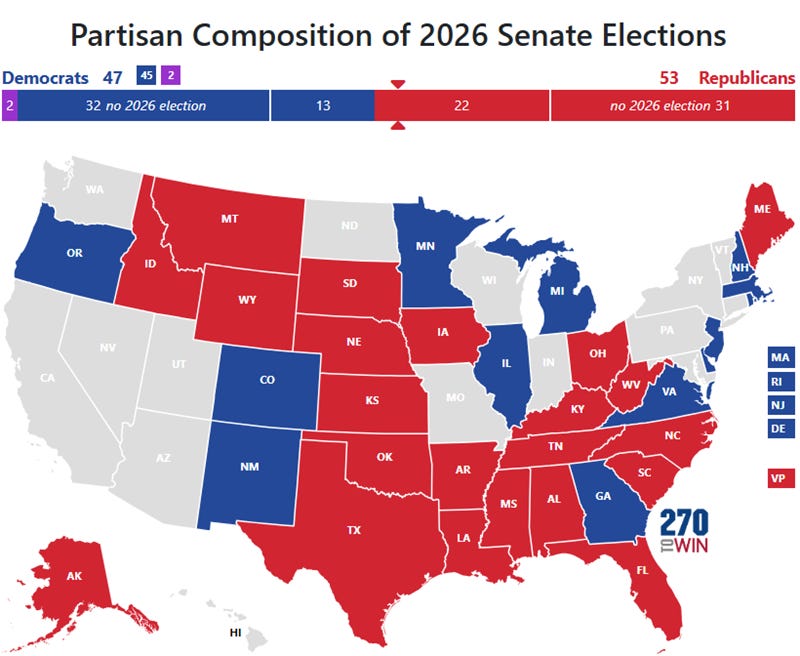
By 9 p.m. Eastern, the focus turns to Iowa and critical Senate races. The performance of candidates in Iowa, especially in the Senate race, will be pivotal for Democrats' chances. The outcomes in Iowa, along with other key states like North Carolina and Ohio, could shape the Senate landscape. The author emphasizes that the results should be interpreted carefully, as the timing of ballot counts can create misleading narratives about the election's direction. Overall, the evening will be a crucial test for both parties, with several key races indicating the potential for a historic Democratic performance or a Republican resurgence.




Related Posts

Stay Informed With the Latest & Most Important News
Newsletter Signup
Previous Post
Next Post