Now Reading: The Religious Gender Gap Is Really a Political Gap
-
01
The Religious Gender Gap Is Really a Political Gap

Article Summary
When it comes to religious attendance, the survey results reveal that women are slightly more likely to report never attending services compared to men. However, the overall differences in attendance rates are minimal, indicating that both genders exhibit similar patterns of religious engagement. Notably, men are more likely to attend services monthly or weekly compared to women. This suggests that while there are distinctions in attendance, they are not drastic enough to draw definitive conclusions about a reversal in the religious gender gap.
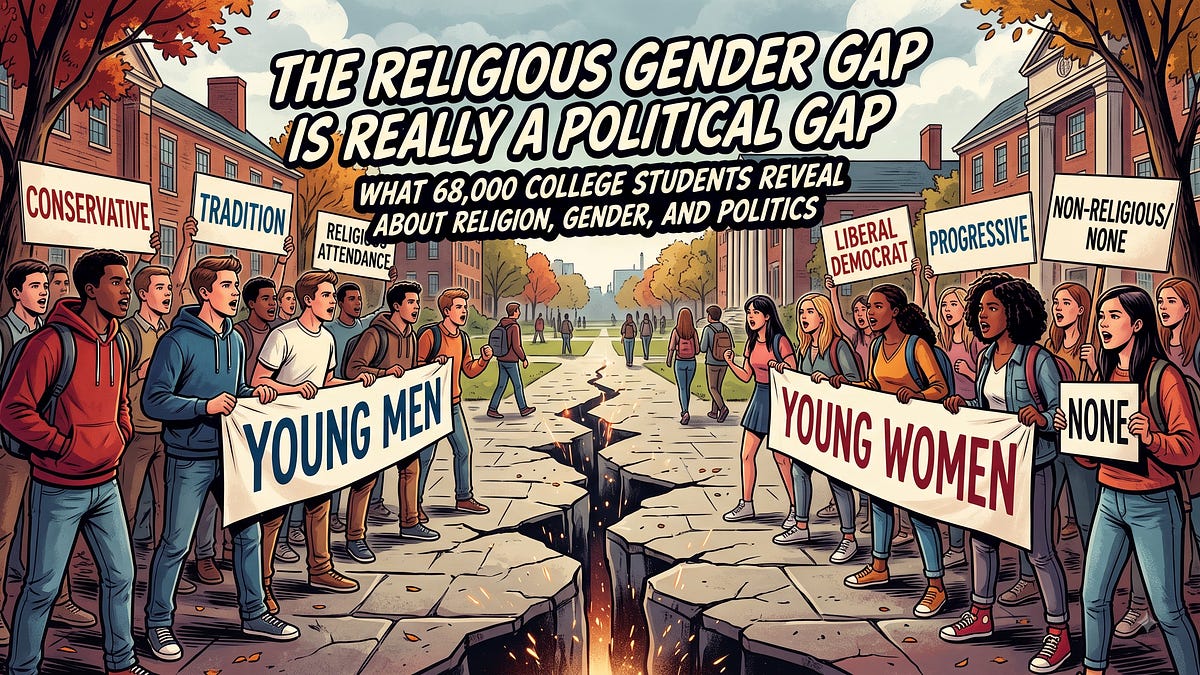
A deeper exploration into the majors pursued by students reveals that the field of study does not significantly influence the gender differences in religiosity. While certain majors exhibit slight variations in non-religious identification between genders, the overall impact appears limited. Instead, the political ideologies of young men and women seem to play a more substantial role in shaping their religious beliefs. The survey indicates that young women are more likely to identify as liberal Democrats, while men are more inclined toward conservative ideologies. This political divide may correlate with differences in religious affiliation, as those leaning left are generally less religious.
Further analysis shows that if the political affiliations of both genders were standardized, the religious landscape would shift considerably. For instance, if men's political views aligned more with the overall sample, their rate of non-religious identification would increase, while women's would decrease. This suggests that the political climate on college campuses significantly influences the religiosity of students, highlighting the complex interplay between faith and political beliefs.
In conclusion, while the FIRE survey does not provide a comprehensive view of all young adults, it offers valuable insights into the changing religious landscape among college-going members of Generation Z. The narrowing or potential reversal of the gender gap in religiosity, alongside the significant impact of political ideology, underscores the need for further exploration into the reasons behind these shifts. Understanding whether women are moving away from traditional religious affiliations due to their political leanings or if their political views are influenced by their religious experiences remains a crucial area for future research.




Related Posts


Stay Informed With the Latest & Most Important News
Newsletter Signup
Previous Post
Next Post