Now Reading: Formalities
-
01
Formalities

Article Summary
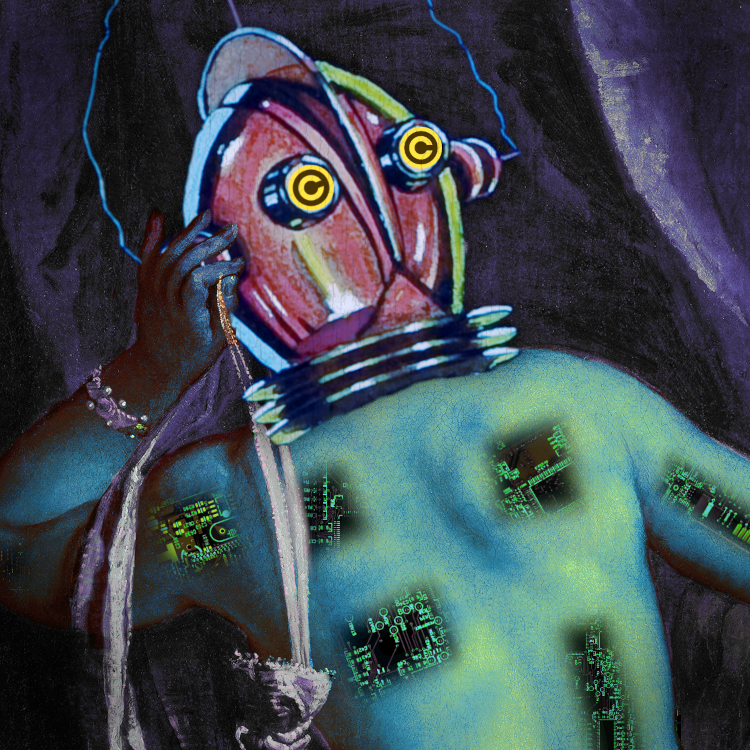
This legal understanding of copyright is often at odds with the views of media executives, who tend to see copyright as a means to secure financial interests rather than promote creativity. They advocate for a pseudo-property right that prioritizes investment over artistic expression. The Copyright Office's refusal to extend copyright to AI-generated works reflects this distinction, as it maintains that AI lacks the human element necessary for copyright eligibility. This principle was exemplified in the case of David Slater, whose attempt to claim copyright over a monkey's selfie was rejected because animals cannot be authors under copyright law.
While the Copyright Office acknowledges that certain elements of AI-generated works, such as creative prompts or human edits, can be copyrightable, the generated content itself remains in the public domain. This means that although a creative prompt may be protected, the resulting AI-generated image can be freely copied and distributed. This creates a complex legal landscape, as it can be challenging to differentiate between AI-generated content and human contributions in collaborative works, leading to potential disputes over copyright ownership.
The discussion of copyright formalities is also critical in this context. Historically, copyright required specific formalities, such as registration and notice, to secure rights. However, the abolition of these formalities in the U.S. has led to a lack of clarity regarding copyright status, resulting in a proliferation of orphan works—pieces of art whose authorship cannot be easily verified. This situation complicates the process of licensing and enforcing copyright, as it becomes difficult to determine who holds the rights to a work.
In light of these complexities, the simplest way to ensure copyright protection is to rely solely on human creators, thereby avoiding the uncertainties associated with AI-generated content. While the Copyright Office's position may seem beneficial for artists, the reality of copyright law remains fraught with challenges, particularly in proving authorship and navigating the intricacies of creative contributions. As AI continues to evolve, the implications for copyright law will require ongoing examination and adaptation to ensure that both creative expression and legal protections are effectively balanced.




Related Posts

Stay Informed With the Latest & Most Important News
Newsletter Signup
Previous Post
Next Post