
Now Reading: The 11 most bonkers lines from Donald Trump’s insane, 461-word Thanksgiving Day rant
-
01
The 11 most bonkers lines from Donald Trump’s insane, 461-word Thanksgiving Day rant
The 11 most bonkers lines from Donald Trump’s insane, 461-word Thanksgiving Day rant

Article Summary
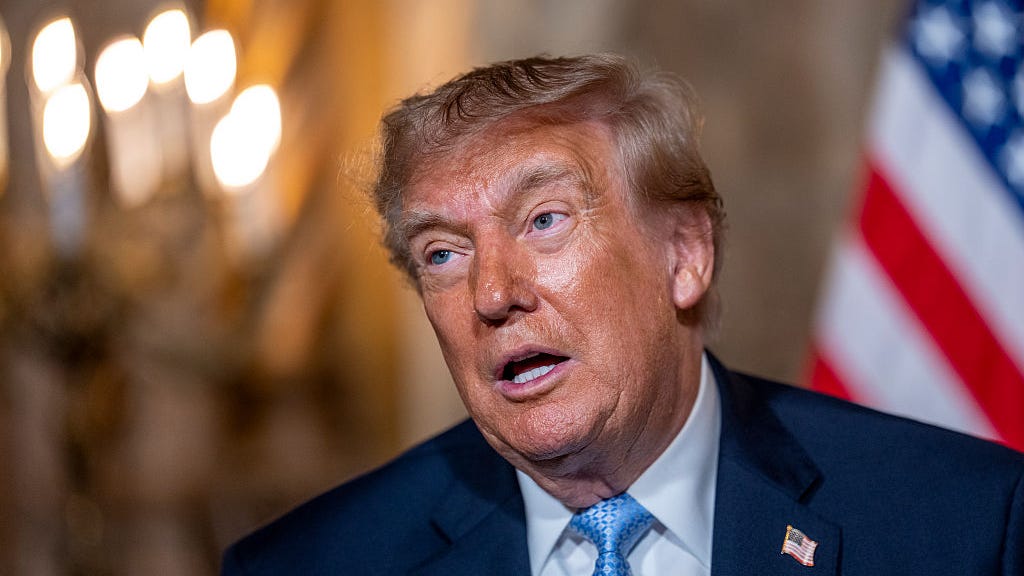
Trump’s Thanksgiving message continued to spiral into more divisive rhetoric, as he expressed gratitude to those he accuses of pushing the country towards the “Radical Far Left.” This included a bizarre claim about individuals wanting to change the U.S. court system to one resembling Sharia law and a critique of wealth redistribution. His comments reflected a broader narrative of grievance against perceived enemies, even as he attempted to frame them as a holiday wish.
One particularly questionable assertion involved Trump thanking the “2% of our Somalian population” who are employed without government assistance, a statistic he seemingly fabricated. This was emblematic of a pattern where Trump often distorts facts to fit his narrative. He then made a curious reference to American citizens, implying a lack of belief in the traditional melting pot ideal that characterizes the country’s identity.
In a peculiar turn, Trump also expressed sympathy for reporters and citizens who criticized him for the state of the White House, which he claimed needed significant renovation. He suggested that the historic building had not been properly maintained since its construction in 1792, despite evidence to the contrary. His obsession with the renovations underscored a broader fixation on his personal legacy and image.
The message concluded with an unusual and alarming acknowledgment of criminals who, according to Trump, had illegally entered the U.S. from foreign institutions. He framed this group in a dehumanizing manner, expressing relief that they were “mostly gone now,” while also offering a strangely affectionate farewell. This rhetoric exemplified Trump's tendency to blend fearmongering with personal grievances, leaving many to question the appropriateness and coherence of such a message during a holiday typically associated with gratitude and unity.




Related Posts
Stay Informed With the Latest & Most Important News
Newsletter Signup
Previous Post
Next Post