Now Reading: Uber’s labor crash
-
01
Uber’s labor crash

Article Summary
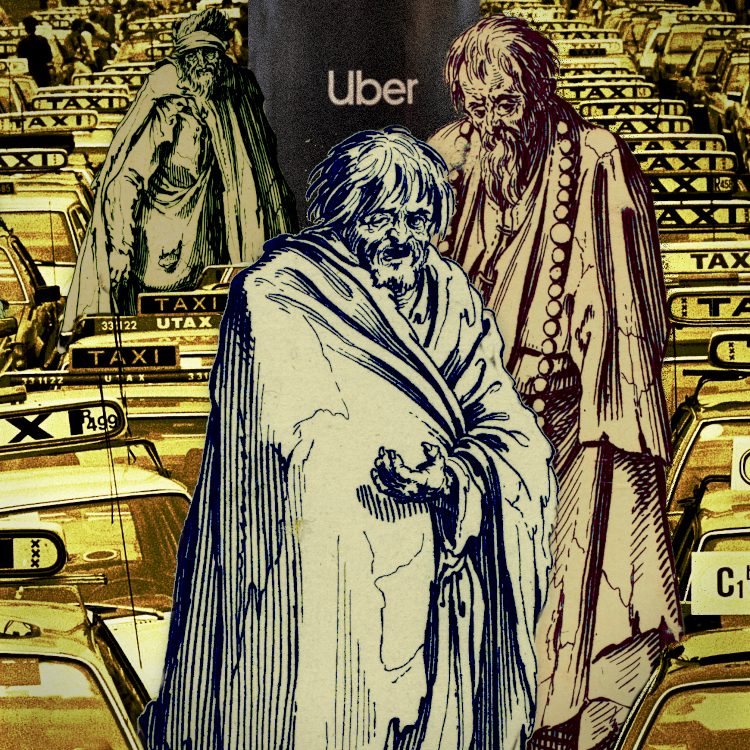
Uber's business model hinges on exploiting its drivers, who are classified as independent contractors, making them vulnerable to low wages and poor working conditions. The article points out that Uber's claims of paying drivers above minimum wage are misleading, as drivers are only compensated for the time they have passengers in their vehicles. This results in a net income that can be as low as $2.50 per hour, especially in high-cost cities like Toronto. Despite this, Uber has been able to maintain a facade of profitability by increasing rider fares and cutting driver pay, an approach that is unsustainable in the long run.
The article discusses how Uber's financial strategies are increasingly reliant on algorithmic pricing and wage discrimination, which allow the company to maximize profits at the expense of both drivers and consumers. It notes that while Uber has achieved profitability post-IPO, this has come at a significant cost to its workforce, leading to a growing driver shortage as workers refuse to accept the low wages being offered. The company's attempts to "rebalance incentives" by raising rider prices are seen as a temporary fix that may not address the underlying issues of driver dissatisfaction and retention.
Moreover, the piece argues that Uber's vision of transitioning to a fleet of robotaxis as a solution to its labor problems is fundamentally flawed. The article emphasizes that replacing low-paid human drivers with expensive autonomous vehicles will not result in a more profitable model. The costs associated with operating and maintaining a fleet of robotaxis will likely exceed the current model, which relies on drivers who provide their own vehicles and cover their own expenses. The prediction that robotaxis will soon be price-competitive with human-driven vehicles is deemed overly optimistic.
In conclusion, the article asserts that Uber's current profitability is built on a precarious foundation of wage theft and price gouging. As the economic landscape shifts and inflation affects all workers, including Uber drivers, the company will face increasing challenges in sustaining its business model. The reliance on desperate workers to subsidize operations is seen as a temporary measure, and the eventual transition to robotaxis is unlikely to provide a viable solution. The future of Uber's profitability remains uncertain, with the looming potential of a collapse if the company cannot adapt to changing market conditions and labor dynamics.




Related Posts

Stay Informed With the Latest & Most Important News
Newsletter Signup
Previous Post
Next Post