Now Reading: Shadi Hamid and Matthew Kaemingk on Whether Democracy Needs Religion
-
01
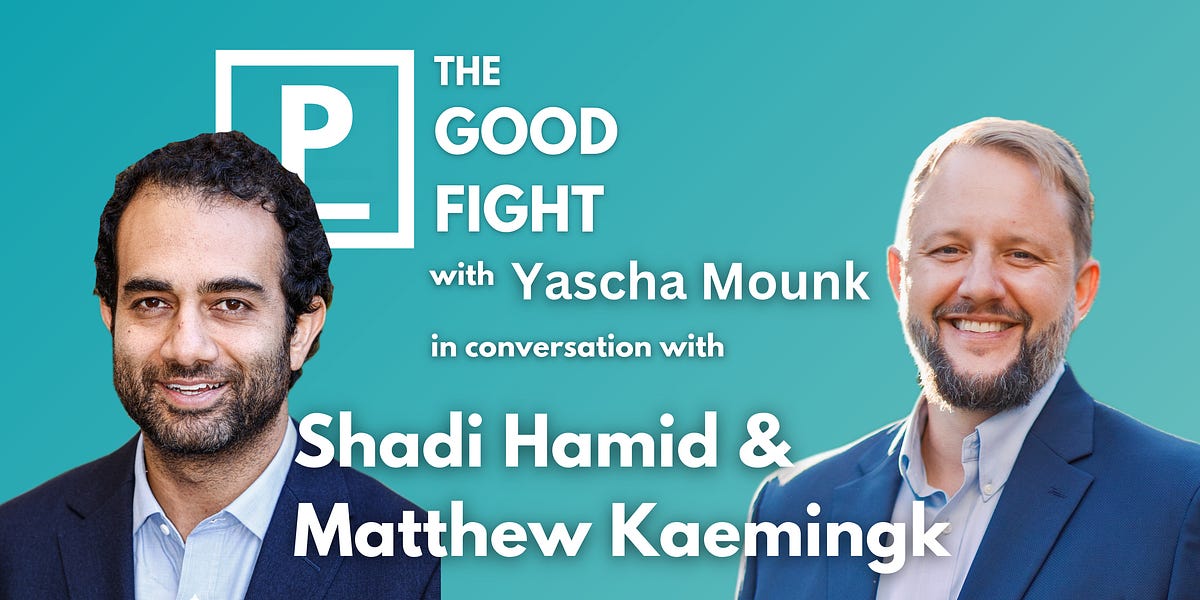
Shadi Hamid and Matthew Kaemingk on Whether Democracy Needs Religion

Article Summary
Kaemingk emphasizes that the belief that secularism would unify society has proven misguided. As people have distanced themselves from traditional religious institutions, they have filled the void with intense political identities that provide spiritual fulfillment. This transformation is not merely a trivial hobby; it carries a significant spiritual weight, manifesting in a heightened sense of urgency and moral righteousness in political discourse. Hamid adds that this phenomenon is not exclusive to the United States; similar trends are observable in Europe, where the erosion of Christian cultural foundations has given rise to extreme political movements.
The conversation also touches on the deeper psychological needs that religion traditionally fulfills, such as the yearning for transcendence and community. Hamid argues that when individuals abandon religious frameworks, they often redirect their search for meaning into politics, leading to an unhealthy conflation of political aspirations with ultimate existential hopes. This tendency can be dangerous, as it places undue importance on political outcomes and figures, potentially resulting in disillusionment and division when these expectations are unmet.
Mounk raises the idea of idolatry, suggesting that when political figures or movements are elevated to divine status, it distorts the nature of political engagement. Kaemingk concurs, noting that traditional religious teachings discourage idolization, reminding individuals to keep political matters in perspective. The authors assert that the institutional qualities of religious organizations provide essential moral guidance and community structure that can help mitigate extreme political fervor. This institutional framework is crucial in navigating complex social issues without succumbing to moral panics or harmful ideologies.
In conclusion, Hamid and Kaemingk advocate for a renewed appreciation of the role of religion in public life, suggesting that its absence has contributed to a more polarized and spiritually unfulfilled political environment. They argue that integrating faith into democratic discourse can help heal societal divisions and provide a more balanced approach to politics, one that recognizes the limitations of political solutions in addressing deeper existential needs. By emphasizing the importance of maintaining a healthy distance between politics and ultimate concerns, they hope to foster a more constructive and less divisive political landscape.




Related Posts
Stay Informed With the Latest & Most Important News
Newsletter Signup
Previous Post
Next Post