Now Reading: Democrats’ New Plan to Bypass the Electoral College
-
01
Democrats’ New Plan to Bypass the Electoral College

Article Summary
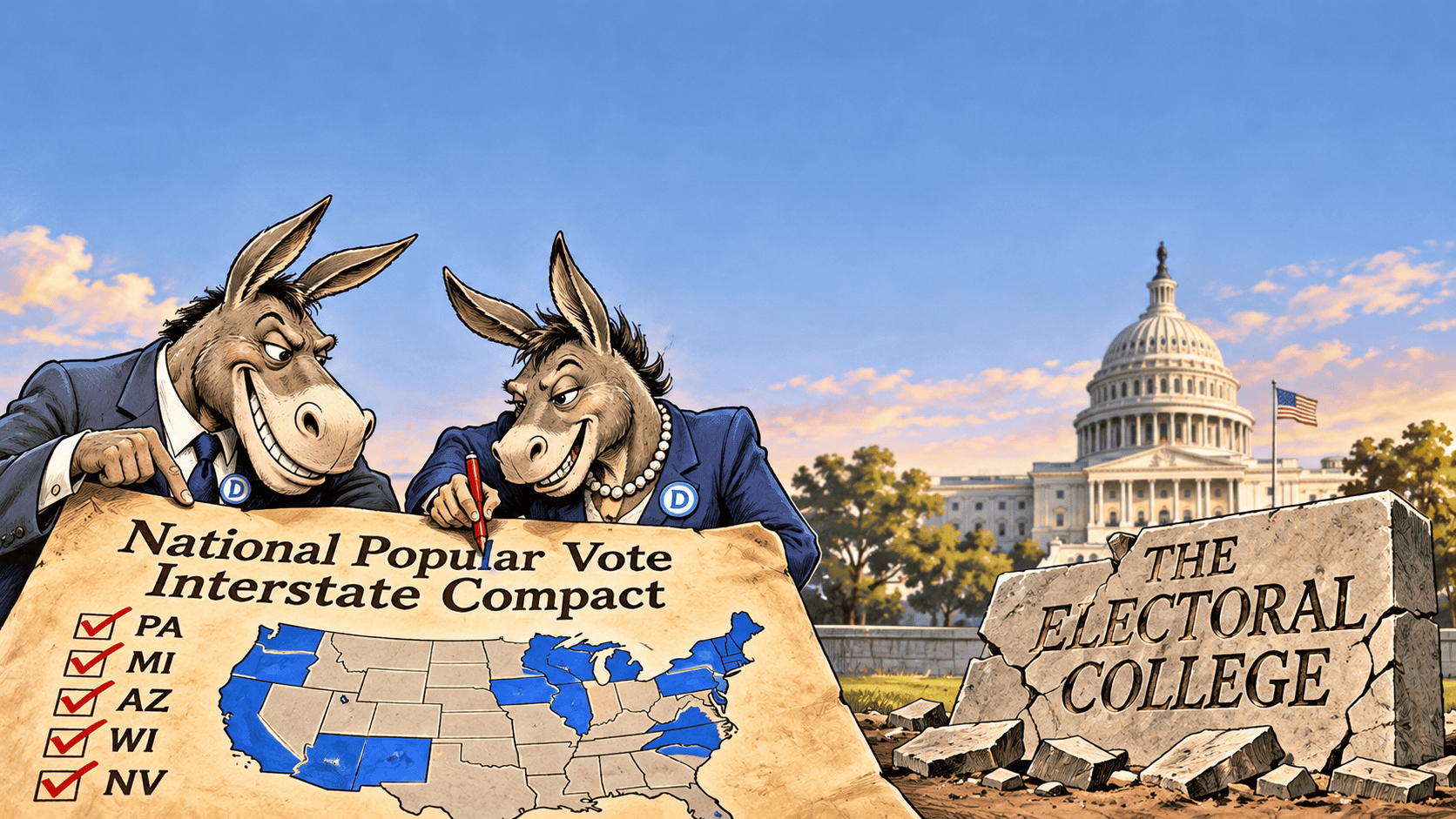
Critics argue that the NPVIC undermines the principle of "one person, one vote," as it could lead to scenarios where a state's electoral votes are awarded to a candidate who did not win the state’s popular vote. For example, under NPVIC, a state like Colorado could be compelled to cast its electoral votes for a candidate who lost there, disregarding the preferences of its voters. Proponents of the NPVIC claim it would create a more democratic system by eliminating the controversies often associated with the Electoral College, which has been criticized for producing outcomes where the national popular vote winner does not secure the presidency.
If the five states that recently shifted to Democratic control join the NPVIC, the compact would control 283 electoral votes, exceeding the 270 needed to effectively bypass the Electoral College. This raises questions about the willingness of the remaining 27 states to accept a system that could potentially disenfranchise their voters. Critics point to the constitutional implications of such a compact, noting that Article I, Section 10, Clause 3 of the Constitution prohibits states from entering into agreements without Congressional consent. While Democrats may have a more favorable Congress, they lack a filibuster-proof majority, making the future of the NPVIC uncertain.
Joining the NPVIC would mean that states could allocate their electoral votes contrary to the popular vote within their own borders, effectively disenfranchising voters. This raises constitutional concerns, as the right to vote is guaranteed to all eligible citizens. Critics argue that if Democrats genuinely sought electoral reform, they could pursue a more straightforward approach by allocating electoral votes proportionally, as seen in Nebraska and Maine. Such a system would align electoral representation more closely with the popular vote and would not face the same constitutional challenges as the NPVIC.
Ultimately, the NPVIC is viewed by many as a strategic maneuver by Democrats to consolidate power in heavily populated, Democratic-leaning states while maintaining their electoral advantages. The proposal is seen as an attempt to rig the electoral system in favor of Democratic interests rather than a genuine effort to enhance democratic representation. Critics contend that true electoral reform should prioritize the voices of all voters, rather than shifting power dynamics in ways that could marginalize certain populations.




Related Posts


Stay Informed With the Latest & Most Important News
Newsletter Signup
Previous Post
Next Post
Previous Post

Next Post