Now Reading: The Most Religious Congressional Districts, and What They Mean for Tuesday
-
01
The Most Religious Congressional Districts, and What They Mean for Tuesday

Article Summary
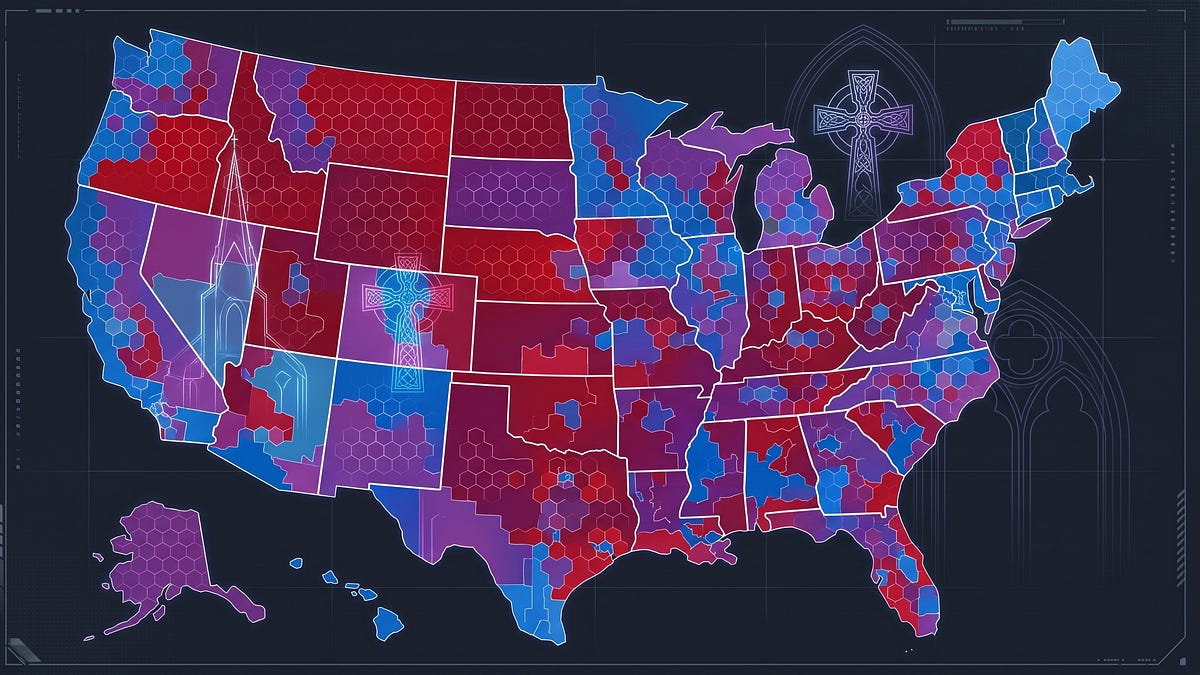
Burge's exploration begins with Evangelical districts, predominantly located in the South. The data indicates that 19 out of the top 20 districts with the highest concentration of Evangelicals were held by Republicans in the 2024 elections, often with significant margins of victory. For instance, Alabama and Mississippi feature prominently, showcasing a strong correlation between Evangelical presence and Republican success. However, one notable exception is Alabama's 7th district, which, despite having a significant Evangelical population, is predominantly Black and thus votes Democratic, illustrating the complexity of religious demographics in electoral outcomes.
In contrast, the analysis of Mainline Protestant districts reveals a more dispersed geographic distribution across the United States, particularly in central Pennsylvania and Iowa. Despite the expectation that Mainline Protestants might lean more liberal, all identified districts in the top 20 sent Republicans to Congress in 2024, with substantial margins of victory. This challenges the stereotype of Mainline Protestants as a liberal voting bloc, indicating that these districts, often rural and predominantly white, are less competitive than anticipated.
The Catholic districts present a different narrative altogether, showcasing a diverse landscape that spans various regions, including the Northeast and parts of Louisiana and Texas. Here, the Democrats secured 14 out of the top 20 seats in the 2024 elections, reflecting a significant shift in voting patterns compared to the Evangelical and Mainline districts. The varying cultural backgrounds of Catholic populations contribute to this electoral divergence, with different immigrant histories shaping distinct voting behaviors.
Looking ahead to the 2026 midterm elections, Burge suggests that Mainline districts may become more competitive for Democrats, with potential seat flips expected due to changing economic conditions and voter sentiment. Conversely, Catholic districts are likely to remain stable for Democrats, although some uncertainty exists in specific races, particularly in Texas. Overall, the analysis underscores that while religious affiliation plays a role in shaping electoral outcomes, broader economic factors may ultimately dictate the trajectory of the upcoming elections, positioning Republicans for potential challenges.




Related Posts


Stay Informed With the Latest & Most Important News
Newsletter Signup
Previous Post
Next Post